About Us



About Us
Building Economic Opportunity From the Family Up
Home Roots Foundation (HRF) is a U.S.-based grassroots nonprofit working with communities in Haiti to expand economic opportunity and strengthen families.
Our work centers on a simple idea:
When women-owned businesses become stronger, families become more financially resilient.
We work primarily with women entrepreneurs, particularly those operating small businesses in communities where access to capital, business resources, and economic opportunity is limited.
Our approach combines business development, access to appropriate financing, practical support, and—when needed—targeted education assistance for their children.
Over time, our work has evolved through listening to the communities we serve. That experience led us from a primarily education-focused approach toward a broader focus on the economic conditions that shape children’s and families’ opportunities.
Today, our work is centered on women’s economic empowerment, household resilience, education, and emerging opportunities in green enterprise.
Our Mission
Help women retain and reinvest more business income.
We advance this mission through practical business development, access to growth capital, support that helps entrepreneurs retain and reinvest business income, and targeted education assistance for participating families.
We also explore locally appropriate approaches that connect entrepreneurship with sustainable livelihoods and environmental responsibility.
Our Vision
Stronger businesses. Stronger families. Greater opportunity.
We envision a Haiti where women have the resources, skills, capital, and opportunity to build sustainable businesses and where families are better positioned to invest in their children’s futures and withstand economic shocks.
We envision communities where:
- women can build and grow viable enterprises;
- families have greater economic resilience;
- children have greater continuity in their education;
- entrepreneurs can access appropriate capital and practical business support;
- young people have opportunities to develop skills and confidence; and
- economic activity increasingly contributes to healthier and more sustainable communities.
How Our Work Evolved
Home Roots Foundation’s work in Haiti began with education.
We initially focused on helping children access school through tuition assistance, school materials, tutoring, and English-language instruction.
As our relationship with communities deepened, parents—many of them women working in small-scale commerce—began approaching us for help with a different challenge: how to earn enough to support their families more consistently.
We listened.
Many of these women were already entrepreneurs. What they lacked was not necessarily motivation or willingness to work, but access to affordable financing, business knowledge, and the ability to retain enough income to reinvest in their businesses.
This led HRF to develop the Women’s Small Business Initiative and, over time, a more focused approach to business growth.
Our experience taught us that supporting children also requires understanding the economic realities of the households in which they live.
That insight became the foundation of our two-generational approach:
Strengthen economic opportunity for women today while helping protect opportunity for the next generation.
Today, we continue to learn from the communities we serve and to refine our approach around what we believe can create durable economic opportunity.
Our Priorities
Women’s Economic Empowerment
Helping women entrepreneurs improve business performance, strengthen working capital, retain more income, and reinvest for growth.
Education & Youth
Providing targeted support that helps participating families keep children in school while creating opportunities for youth learning and development.
Green Enterprise
Exploring how environmentally responsible business practices and emerging green value chains can create economic opportunity while addressing local environmental challenges.
Community Partnerships
Working with Haitian organizations and community leaders who bring local knowledge, relationships, and leadership to the development and implementation of programs.
Our Approach
We listen first.
We work with communities to understand challenges, test practical approaches, measure results, learn from experience, and improve our programs.
We believe strong programs should be:
Practical — designed around real constraints and opportunities.
Community-informed — shaped by the people who participate in them.
Measurable — supported by evidence and learning.
Adaptable — improved as we learn what works.
Built for sustainability — designed to strengthen participants’ own capacity and resources over time.
A Growing Partnership in Haiti
HRF works with Haitian organizations and community leaders to develop locally grounded solutions.
One of our important partnerships is with ODENOH (Development Organization for a New Haiti), a Haitian community-based organization whose work is increasingly focused on environmental sustainability, green enterprise, youth leadership, and sustainable livelihoods.
Through this partnership, HRF can support the development and resource mobilization of community-based models while ODENOH brings Haitian leadership, local relationships, and implementation experience.
We believe effective international partnership should strengthen local leadership rather than replace it.
Founder's Story and Our History in Haiti
Growing up between Haiti and the United States gave our founder, Dr. Joseph Paul, a unique perspective on opportunity, inequality, and resilience. Joseph spent his early childhood in Haiti before moving to the United States at the age of eight. Raised just outside Boston, he became involved in community service and social activism as a teenager, developing a lifelong conviction that lasting change begins by addressing the root causes of injustice rather than its symptoms.
Following the devastating 2010 earthquake, Joseph returned to Haiti and witnessed both the extraordinary resilience of its people and the immense challenges they faced. The experience left a lasting impression. He realized that one day he would dedicate himself to helping create long-term opportunities in Haiti—not simply through charity, but by building sustainable solutions that empowered people to improve their own lives.
While pursuing a PhD in Biochemistry and Molecular Biology at Howard University, Joseph began laying the foundation for that vision. To maximize the resources he could invest in Haiti, he adopted an extraordinarily frugal lifestyle and directed much of his savings toward launching Home Roots Foundation. What began as a temporary sacrifice became a defining chapter of his journey, reinforcing his belief that meaningful change often requires persistence, patience, and a willingness to endure discomfort in pursuit of a greater purpose.
In 2018, Home Roots Foundation formally began its work in Haiti.
Learning From the Community
Our first programs focused on improving children’s access to education. We helped families pay school tuition, provided educational supplies, offered tutoring and English classes, and worked to create supportive learning environments for students.
As our work expanded, more parents began seeking assistance. Rather than assuming we already knew the answers, we spent time listening.
Again and again, mothers shared the same message.
They didn’t simply want financial assistance. They wanted the opportunity to build stable businesses, earn reliable incomes, and provide for their children with dignity.
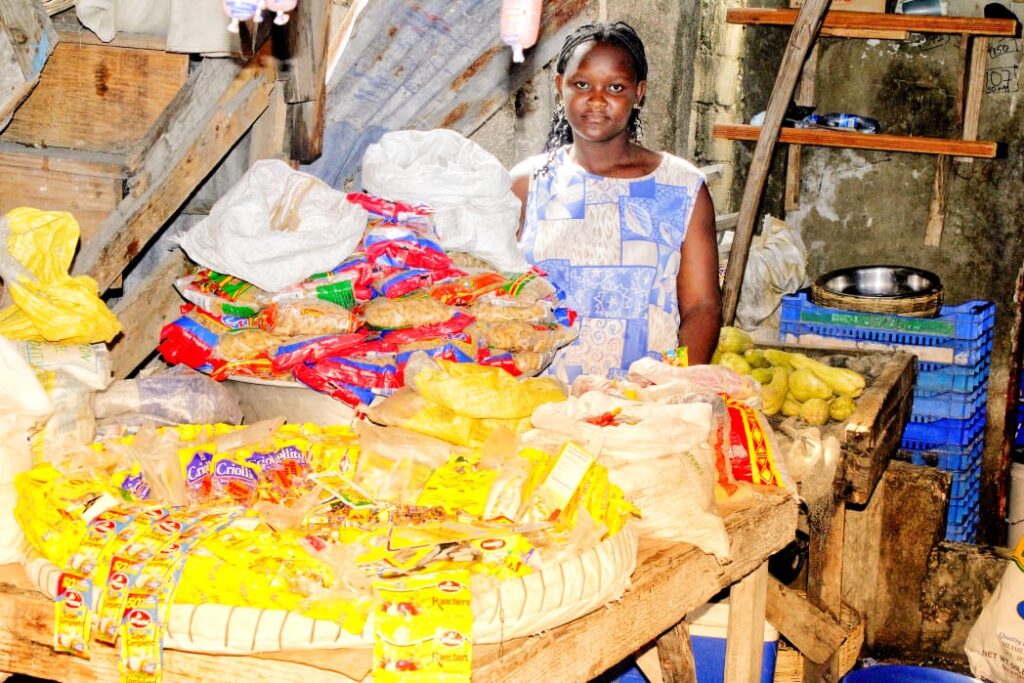
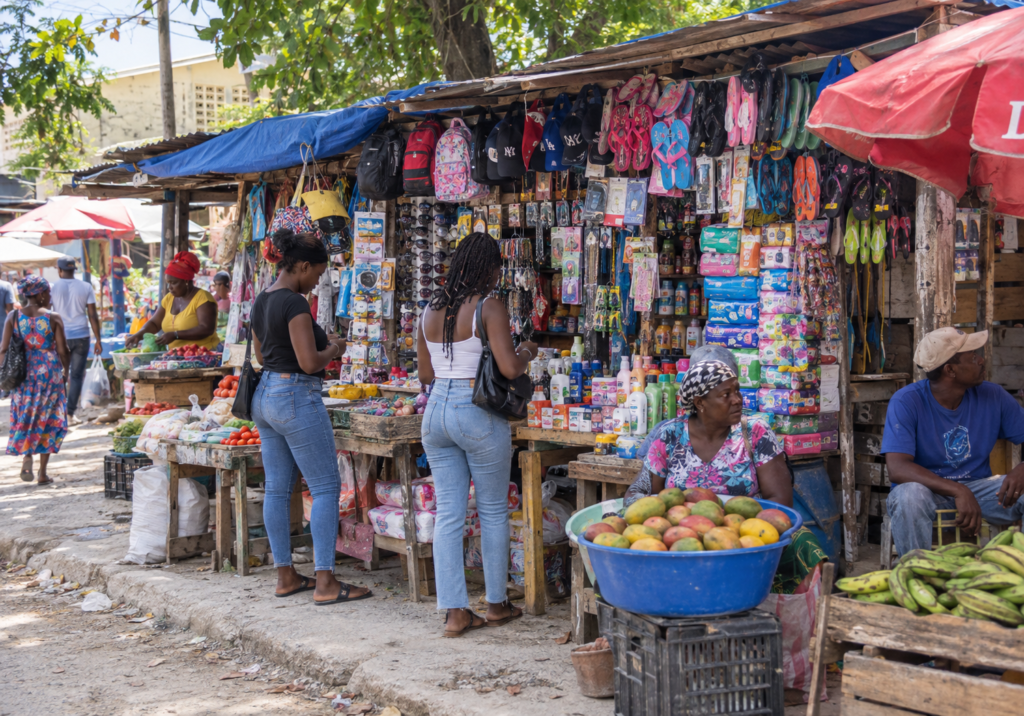
Many were hardworking street vendors and small business owners who struggled despite working long hours. High inventory costs, limited access to affordable financing, and a lack of business support made it difficult to grow their businesses or build financial security.
Those conversations fundamentally changed how we understood poverty.
We realized that helping children remain in school required more than paying tuition. It required strengthening the economic foundation of the household.
From Charity to Economic Empowerment
That realization transformed Home Roots Foundation.
Rather than focusing primarily on addressing the symptoms of poverty, we shifted toward helping families build lasting economic resilience by empowering the women who so often serve as the financial backbone of their households.
Today, Home Roots Foundation helps women entrepreneurs retain and reinvest more business income by lowering business costs, expanding access to growth financing, and providing ongoing enterprise growth support. Our approach is designed to help women build stronger businesses, create more stable household incomes, and generate opportunities that benefit entire families.
Education remains central to our vision—not because we operate schools, but because we believe that when women build stronger businesses, children are more likely to remain in school, families become more financially secure, and communities are better positioned to thrive.
Everything we have built has been shaped by one guiding principle:
The people closest to a problem are often the ones best equipped to help solve it. By listening first, we can build solutions that create lasting change.